On Tuesday 25th November it was White Ribbon Day.
What is White Ribbon Day?
White Ribbon Day was founded with the intention of getting to the root of the problem of violence against women and girls by tackling harmful masculine traits and social norms around what it means to be a man. If violence against women is to be eliminated, it remains essential that men become part of the solution for change.
What was the theme for 2025?
The theme for 2025 was ‘We Speak Up’
Letting sexism slide puts women and girls at risk. Sexist jokes, catcalling, staring, and comments might seem harmless, but they are serious because they can lead to violence and abuse. Lots of people see crimes like sexual assault or harassment as extreme and isolated incidents that have nothing to do with their daily lives. The truth is that even the smallest of every day actions count to make a difference to stop them from happening. By simply not passing off sexist ‘jokes’, catcalling or staring, you can help stop behaviour that can lead to serious violence.
This White Ribbon Day, we want more people to use their voices and speak up to create a world where everyone is safe, equal and respected. Every time we ignore something that doesn’t feel right, we miss a chance to set a better example.
Why is White Ribbon Day important?
1 in 4 women will be a victim to sexual assault or attempted assault in their lifetimes. (National Audit Office, 2025)
3 in 5 women have experienced sexual harassment, bullying or verbal abuse in the workplace (trade union congress, 2023)
15% of women in England, and 17% of women in wales have experienced online violence (Professor Olga Jurist, the open university, 2024)
Nearly a quarter (24%) of girls in mixed sex schools said they had experiences of unwanted sexual touching in school (EVAW, 2023)
39% of secondary school teachers said they are aware of at least one incident of misogynistic behaviour from a pupil in the last week. (BBC, 2025)
What does the White Ribbon symbolise?
The White Ribbon is the globally recognised symbol to end men’s violence against women and girls. Since the inception of the white ribbon movement 35 years ago in Canada, the white ribbon has become an important symbol to end gender-based violence.
Allyship is a central message of the white ribbon; it represents men taking responsibility to challenge this issues and being allies, every day, to stop violence against women and girls before it starts.
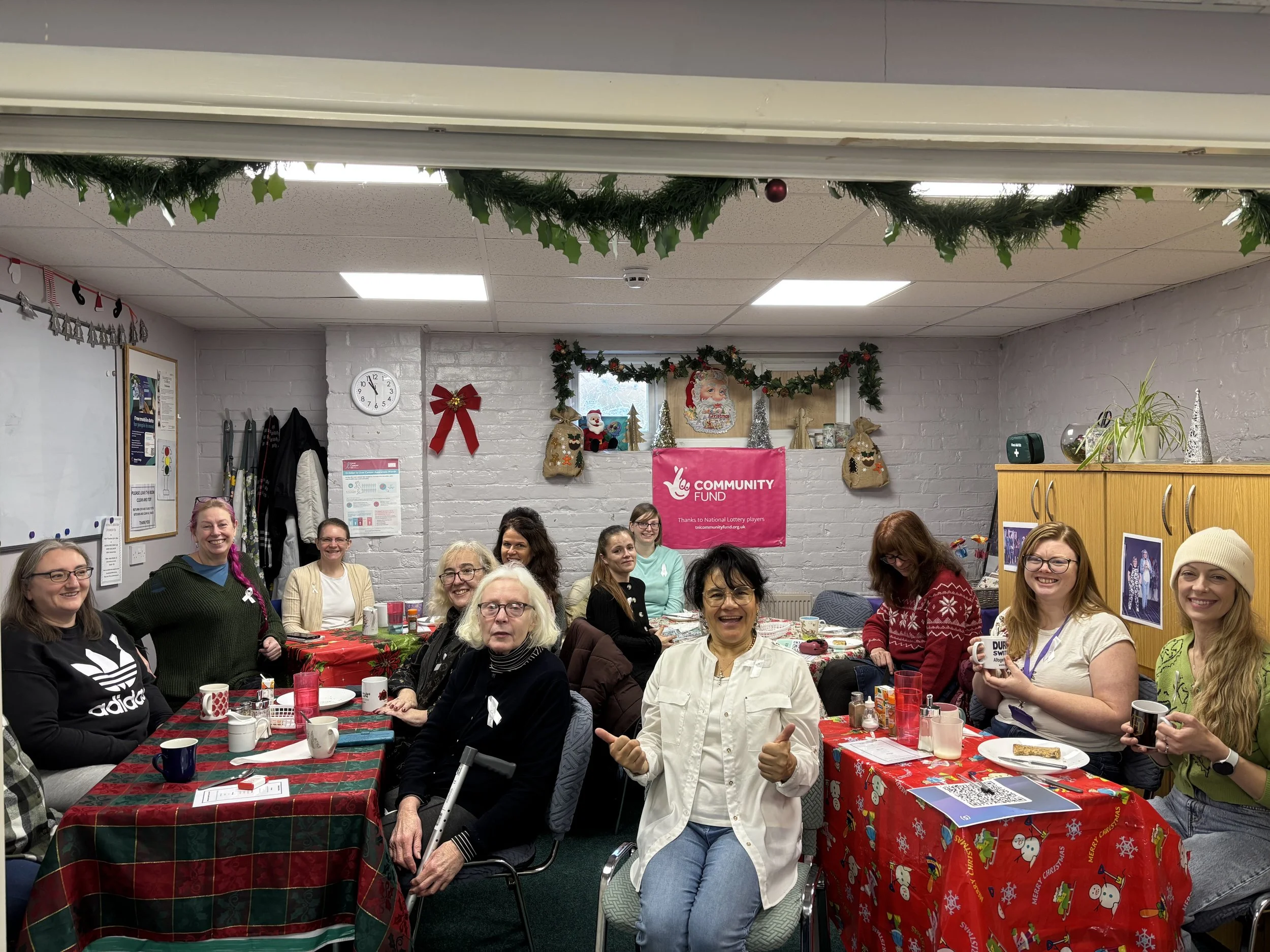
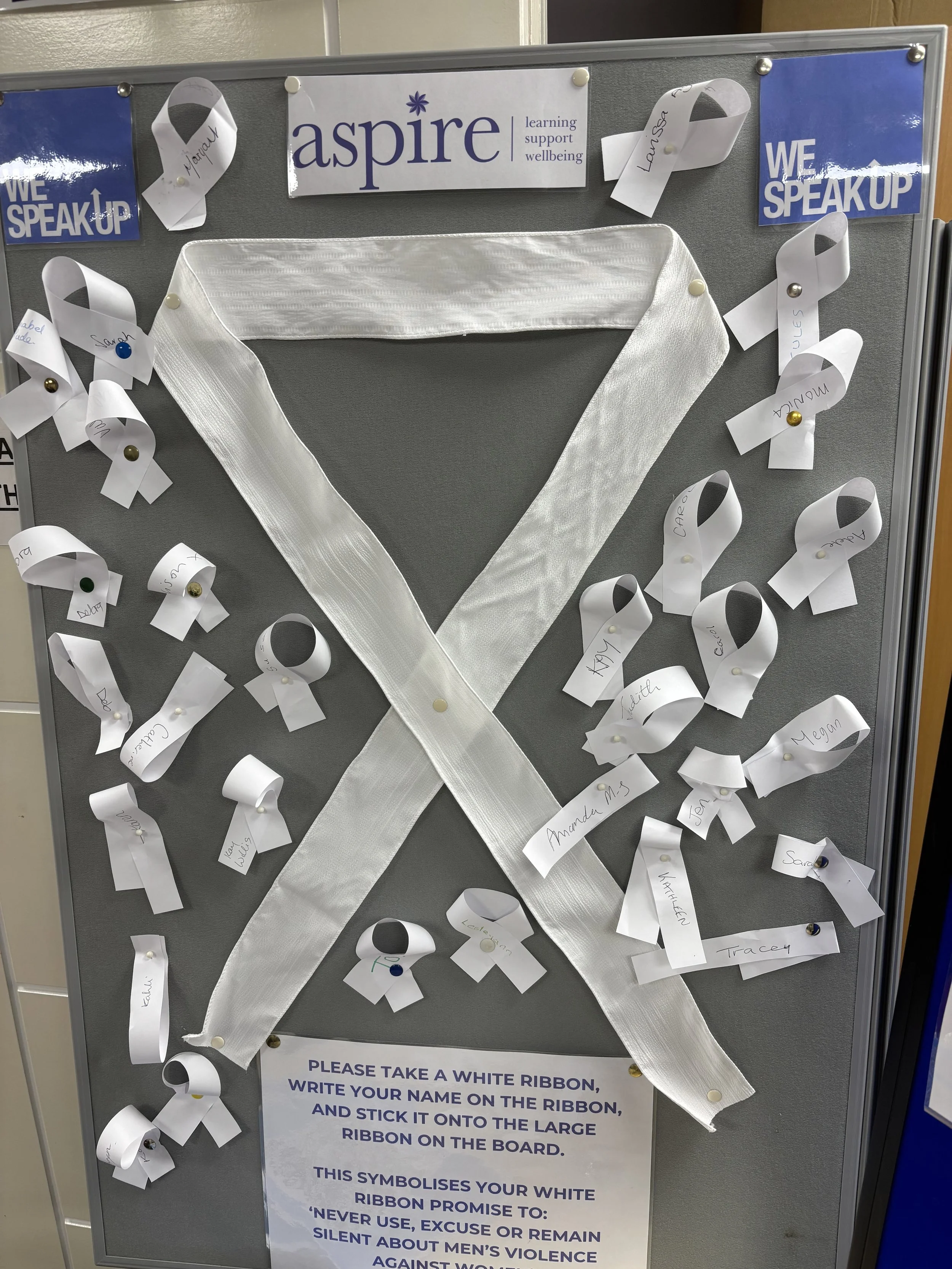
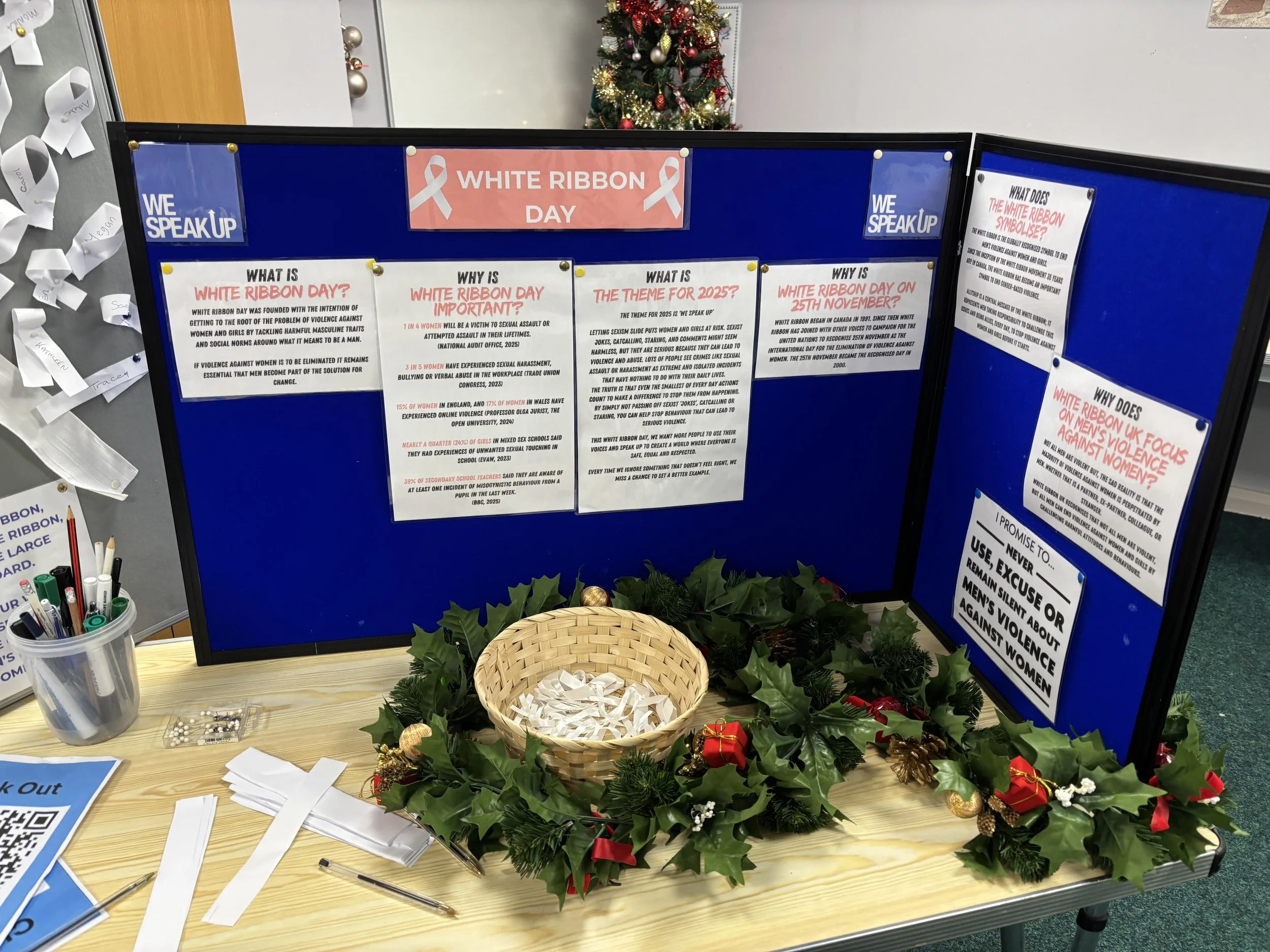
At Aspire, we hosted a White Ribbon Day themed Breakfast Club. The morning was a great opportunity for our women to have a warm, healthy breakfast and a chat whilst learning about the importance of White Ribbon Day and pledging their White Ribbon promise to ‘never use, excuse or remain silent about men’s violence towards women’.
On our social media, we have been running a #16daysofactivism campaign. From the 25th November (International Day for the Elimination of Violence against Women) - 10th December (Human Rights Day) the world are called to a period of 16 days of activism to raise awareness and help eliminate violence against women and girls. Each day of the period of #16daysofactivism we are raising awareness of different forms of abuse that women and girls face in the world.
By raising awareness, we can begin to tackle the harmful attitudes and behaviours of men that contribute to violence against women and girls.
On Day 1 of #16daysofactivism we are raising awareness of Street Harassment.
Street harassment encompasses unwanted behaviour in public areas including, but not exclusive of: unsolicited sexual comments or gestures, unwanted whistling or honking, so-called ‘catcalling’, intrusive staring, stalking or being followed, unwanted touching, persistent sexual advances, being insulted or shouted at, and being physically threatened.
ONS Statistics highlight that in the UK:
82% of women feel unsafe walking alone in a park or open space after dark
50% of women feel unsafe in a quiet street close to home
48% of women feel unsafe on public transport
45% of women feel unsafe in a busy public space
71% of women said they had experienced harassment in a public space
20% of 16-19 year olds and 21% of 20-24 year olds have experienced street harassment in the previous 12 months
The behaviours may be perpetrated by men or boys who are known to you or it may be from a range of different unconnected individuals with the cumulative effect being a unified message that men have more right to be in public spaces than women and have more control over that space.This can cause a limit on freedom for women and girls as they avoid going out in public places to limit the chances of this happening. It can also decrease confidence in women and girls and many may feel fearful to go out in public.
On Day 2 of #16daysofactivism we are raising awareness of Post Separation Abuse.
Post-separation abuse is the ongoing pattern of coercive, controlling, or violent behaviour by an ex-partner after a relationship has officially ended. The decision to end the relationship can intensify the focus of the abuser, they risk losing control completely and may resort to extreme or persistent behaviours to try and regain control. This may be emotional manipulation, begging for forgiveness, promising to change their ways, stalking or harassment. The behaviour may also be violent and aggressive. Where children are involved, perpetrators may use them to maintain control.
Kaleidoscope UK found that:
92% of those that had left an abusive relationship said that the abuse intensified following separation
91% had experienced ‘victim blaming’ when talking to others about the post separation abuse they suffered
67% said they had been subjected to more than 5 years of ongoing post-separation abuse
A lack of understanding of post-separation abuse can lead to the courts unwittingly permitting or facilitating ongoing abuse and control, particularly through child contact arrangements. Greater awareness, targeted legal reforms, safe housing, and financial support are desperately needed to protect survivors beyond their relationship’s end.
On Day 3 of #16daysofactivism we are raising awareness of Coercive Control.
Coercive control is an act or a pattern of acts of assault, threats, humiliation and intimidation or other abuse that is used to harm, punish, or frighten a victim. It aims to make a person dependent on the perpetrator by isolating them from support, exploiting them, depriving them of independence and regulating their everyday behaviour. It can range from influencing what you wear, regulating where you go, isolating you from friends and family, humiliating you, and depriving you of access to support services and basic needs.
Coercive or Controlling behaviour became an offence in UK Law in December 2015 under the Serious Crime Act 2015. The offence covers extreme psychological and emotional abuse and carries a maximum of 5 years imprisonment, a fine or both.
ONS statistics found:
There were 45,310 offences of coercive control recorded by the police in England and Wales in the year ending March 2024
97.7% of those convicted for coercive behaviour in England and Wales were male
94% of coercive control victims are women and 74% of perpetrators are men
76% of coercive control cases happen within an intimate partner context
On Day 4 of #16daysofactivism we are raising awareness of Forced Marriage.
A forced marriage is one in which a person uses violence, threats or another form of coercion to cause someone else to enter into a marriage and believes (or ought reasonably to believe) that their actions may cause that other person to enter into the marriage without free and full consent. Forced marriage may involve pressure from family members, people in the community, or your future partner. Methods of coercing or forcing someone into the marriage may involve, violence, abuse, bribery, humiliation, being told you will bring shame on the family or community, threats, financial control, being disowned or cut off, neglect or abduction. Some individuals are at risk of extreme physical harm, resulting in their murder, for refusing to consent to a forced marriage. Forced marriages can occur in all different groups of society and victims can vary in age, gender, religion, or ethnicity. Forced marriage is illegal in the UK and is recognised as a form of domestic abuse and an abuse of human rights.
Forced marriage is completely different from an arranged marriage. In an arranged marriage, both parties have consented to the union but can still refuse to marry if they choose to without repercussions.
In 2024, the joint Home Office and Foreign, Commonwealth & Development Office Forced Marriage Unit reported 240 cases of forced marriage:
35% of victims were aged 17 and under
34% of victims were aged 18 to 25
26% of victims had mental capacity concerns
71% of victims were female
On Day 5 of #16daysofactivism we are raising awareness of Gaslighting.
Gaslighting is a term used to refer to people who make covert attempts to manipulate people, particularly in abusive relationships. This may be being told that something did not happen the way you recall and can make you doubt yourself. Over time this can erode self-esteem and self-worth.
Gaslighting is a form of psychological manipulation, and the term was officially adopted in a High Court ruling in England and Wales in 2022 to describe coercive behaviours, giving it legal legitimacy in court cases.
Of the 45,310 offences of coercive control recorded by the police in England and Wales, gaslighting was prevalent in almost every case.
On Day 6 of #16daysofactivism we are raising awareness of Sexual Violence.
Sexual violence may involve indecent exposure, grabbing, groping, or forcing you into sexual activity you do not want. Sexual violence is not related to what you wear, how much you have drunk or your age. The responsibility for sexual violence lies solely with the perpetrator. Whatever your experience of sexual violence or assault, it can have a devastating impact on your mental health and feeling of safety, and can take a long time to recover from.
The Crime Survey for England and Wales estimates that 20 - 25% of women have experienced some type of sexual assault since the age of 16, equivalent to an estimated 3.4 million female victims.
41% of UK girls aged 14 to 17 in an intimate relationship are likely to experience some form of sexual violence from their partner.
On Day 7 of #16daysofactivism we are raising awareness of Economic Abuse. This can involve putting debt in your name, taking out credit cards, loans, mobile phone contracts or car leases and even coercing you to sign over property or assets. Economic abuse can also involve controlling all the money, denying you necessities, allocating you an allowance and forcing you to prove and explain your spending. It may also involve limiting access to the benefits that you are entitled to or refusing to let you work.
16% of adults in the UK (8.7 million people) say that they have experienced economic abuse.
60% of victim-survivors of coercive control have been coerced into taking out debt which can take many years to repay and impacts credit ratings.
25% of women who have suffered economic abuse report continuing to experience it after leaving the abuser.
On Day 8 of #16daysofactivism we are raising awareness of Sexual Abuse. Sexual abuse is any non-consensual sexual contact perpetrated by a partner, ex-partner, family member, friend of the family or someone in a position of trust or authority. In most cases it occurs where there is an imbalance of power. Sometimes, sexual abuse may involve grooming, when the perpetrator will work to gain your trust and make it difficult for you to seek the support of others or to report the assaults.
Rape Crisis England and Wales report that:
1 in 6 children have been sexually abused
2 in 5 rapes against women are carried out by their partner or ex-partner
6 in 7 rapes against women are carried out by someone they know
On Day 9 of #16daysofactivism we are raising awareness of Emotional Abuse. It can be difficult to recognise emotional abuse. Often relationships begin with the perpetrator being very charming and attentive, with the emotional abuse creeping in gradually over time. Emotional abuse may be blaming you for their behaviour, criticising you, embarrassing or humiliating you, controlling how you dress, isolating you from your friends and family, dismissing your opinions or feelings, twisting facts, jealousy, monitoring and controlling you.
Emotional abuse can cause long term psychological damage, including low self esteem and depression.
Persistent emotional abuse is a serious offence of coercive or controlling behaviour under The Serious Crime Act 2015.
NSPCC report that:
1 in 15 children in the UK have been emotionally abused
There were almost 59,000 police-recorded offences related to emotional abuse in England, Wales and Northern Ireland in the past year
Crime Survey for England and Wales released by ONS reported that:
Almost 1 in 11 adults aged 18-74 had experienced emotional abuse before the age of 16
91% of domestic abuse survivors experienced some form of emotional abuse in their relationship
On Day 10 of #16daysofactivism we are raising awareness of Revenge Porn. Revenge porn describes the distribution of intimate or sexual images or film to cause distress, embarrassment, or humiliation. The distribution of intimate or sexual images or film can have a devastating impact on anyone affected and the threat of distribution can also cause intense fear and psychological harm.
It is an offence to disclose private sexual images without consent of the person who appears in them for the purposes of causing distress under the Criminal Justice and Courts Act 2015 with a maximum prison sentence of 2 years.
Revenge Porn Helpline 2024 report highlighted:
A total of 22,275 reports were made in 2024
Over 81% of cases involved a male perpetrator
1.42% of adult women in the UK experience non-consensual intimate image abuse annually
39% of cases involved individuals aged 18-24 and 30% involved individuals aged 25-34
On Day 11 of #16daysofactivism we are raising awareness of Physical Abuse. Physical abuse is the act of intentionally causing someone harm or injury through physical force. Acts of physical abuse may start as seemingly small acts but can escalate over time. The abuser may be extremely remorseful after an attack and may even cry and beg forgiveness. They may also blame you and say that the abuse is your fault. There may be a period of reconciliation and then the cycle starts again. The perpetrator may also blame their behaviour on stress, drink or drugs and make you feel as though if only those things could be sorted out, they would stop the violence or abusive behaviour. Whatever the excuse, the abuse is never your fault.
NSPCC reported that 1 in 14 children in the UK have been physically abused
ONS 2025 reported 108 domestic homicides in the year ending March 2024, of these 83 were women and 66 of these victims were killed by a partner or ex-partner
National Police Chiefs’ Council reported in 2024 there has been over 1 million violence related crimes against women and girls in the UK
SafeLives reported that each year more than 75,000 people in the UK are at high and imminent risk of being murdered or seriously injured because of domestic abuse.
On Day 12 of #16daysofactivism we are raising awareness of Female Genital Mutilation.
Female Genital Mutilation, FGM, is illegal in the UK and is child abuse. It involves deliberately injuring, cutting, removing parts of, or changing the genitals for no medical reason. People may use culture, tradition, or religion to justify their actions however FGM has a detrimental impact on women and girls lives and is widely understood to be a violation of their human rights.
UNICEF state that there are over 230 million girls and women alive today, living in 31 countries, who have undergone FGM.
NHS England Female Genital Mutilation Quarterly Report January to March 2025 reported 2,245 individual attendances where FGM was identified.
On Day 13 of #16daysofactivism we are raising awareness of Stalking.
Stalking is a pattern of repeated, unwanted attention or any behaviour that causes you to feel scared, anxious, or distressed. The behaviour may involve following you, sending lots of messages, interfering with your property, watching you, giving unwanted gifts, making threats or intimidating you. Individually, each incident may seem like a small act but when added up they may amount to behaviours that cause you distress, alarm or to feel afraid.
Crime Survey for England and Wales 2024 found that:
1.5 million people aged 16 and over said they had experienced stalking.
20.2% of women experience stalking
8.8% of those aged 16 to 19 experience stalking
On Day 14 of #16daysofactivism we are raising awareness of Human Trafficking. Human trafficking, sexual exploitation and modern-day slavery happen all over the world, including in the UK. Many victims of trafficking are recruited through deception or coercion often with the promise of a better life abroad. The majority of victims of trafficking are women and girls, and over a third of those trafficked worldwide are children. Experiencing trafficking can have profound long and short term physical and emotional effects due to the large amount of trauma that a victim may have suffered.
In 2024, the Home Office Statistics reported around 19,125 referrals were made for modern slavery and human trafficking. In 58% of these referrals, the potential victim reported exploitations as a child.
On Day 15 of #16daysofactivism we are raising awareness of ‘So-called’ Honour Based Violence.
‘Honour based’ violence is an umbrella term used to describe a broad range of behaviours perpetrated by individuals, groups or communities to control and punish a member of the family or social group, for behaviours that are perceived to go against those expected, bringing ‘dishonour’ to the family or community.The community, family or individuals within the family may use violence, threats, intimidation, and other forms of abuse to control or punish the person deemed to be transgressing.
Home Office Statistics report in the year ending March 2025, there were 2,949 honour based violence offences recorded by the police in England and Wales. This is a 7% increase compared to the previous year.
On Day 16 of #16daysofactivism we are raising awareness of Tech Abuse. Technology can bring many benefits, but with increasing numbers of ‘smart’ and ‘connected’ devices in our homes and on our person, it is becoming easier for this technology to be abused by people who wish to monitor, stalk, record, isolate and control. Increasing numbers of people report that technology played a part in the abuse they experienced, whether it was messages and posts on social media, trackers on their phone or being recorded by their smart speaker or a hidden camera.
The 2024 National Policing Statement for Violence Against Women and Girls recorded 123,515 offences with an online element between August 2022 and July 2023.
In 2019, domestic abuse charity Refuge reported that 72% of women accessing its services said that they had been subject to tech abuse.